


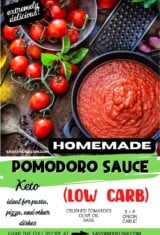
If you’re looking for a classic, flavorful tomato sauce, this Easy Pomodoro Sauce uses simple ingredients like tomatoes, garlic, and olive oil to create a rich, balanced base for pasta, pizza, and more. You can make it either rustic or smooth, and if you prefer a chunkier option, try my healthy hearty marinara sauce.
Quick Look: Easy Pomodoro Sauce 30 Minute Recipe
- ✅ Key Takeaway: A fast, tomato-forward Italian sauce that stays light, fresh, and versatile with minimal ingredients.
- ⏱️ Prep Time: 10 minutes
- ⏱️ Cook Time: 20 minutes
- ⏱️ Total Time: 30 minutes (15-minute quick option available)
- 🍽️ Servings: 4 portions
- ⚡ Calories: 111 per portion
- 🍅 Flavor Profile: Fresh tomato, garlic, olive oil
- 🧂 Core Ingredients: Tomatoes, garlic, olive oil, basil
- 👌 Difficulty: Easy, 2 ways to make
- 🍝 Best Use: Light pasta dishes, pizza sauce, dipping
- 🥖 Pairs With: Spaghetti, chicken, crusty bread
- 🔄 Texture Control: Blend for smooth or leave slightly chunky for rustic finish
- ❌ Avoid: Burning garlic or overcooking (dulls fresh flavor)
- 🧠 Why This Recipe Works: Controlled garlic sautéing, quality tomatoes, and short simmering create a balanced, fresh flavor without heaviness.
- 🔍 Pomodoro vs Marinara: Pomodoro is smoother and thicker with a clean tomato flavor, while marinara is chunkier, lighter, and more herb-forward.
SUMMARIZE & SAVE THIS CONTENT ON
Why You’ll Love This Recipe
- Made with simple pantry ingredients
- Ready in about 30 minutes
- Naturally gluten-free and vegetarian
- Works for pasta, pizza, and more
- Easy to customize
If you prefer a more rustic tomato sauce, you can also try my healthy hearty marinara sauce, which has a chunkier texture. This sauce is especially useful as a base for dishes like easy pasta bolognese, where it adds depth without extra effort.
Jump to:
- Quick Look: Easy Pomodoro Sauce 30 Minute Recipe
- Why You’ll Love This Recipe
- Why This Pomodoro Sauce Is Better Than Most?
- Ingredients You’ll Need
- Variations
- How to Make Easy Pomodoro Sauce 30 Minute Recipe
- Two Ways to Make It
- Expert Tips
- What to Serve With Pomodoro Sauce
- Easy Pomodoro Sauce 30 Minute Recipe FAQs
- Other Recipes that use Pomodoro Sauce
- Pomodoro Sauce
Why This Pomodoro Sauce Is Better Than Most?
This pomodoro sauce stands out because it prioritizes technique over excess. Garlic is gently sautéed to avoid bitterness, high-quality tomatoes provide natural balance, and the sauce is simmered just enough to concentrate flavor while staying fresh. It also offers controlled texture (rustic or smooth) and finishes with precise seasoning, resulting in a clean, rich, tomato-forward sauce without heaviness.
If you’re looking for a similar sauce with a chunkier texture and more herbs, you may also enjoy this healthy hearty marinara sauce, which is a bit more rustic.
🟡 Fun Fact
Pomodoro sauce became widely popular in Italy only after tomatoes were introduced from the Americas in the 16th century—before that, Italian cuisine didn’t include tomatoes at all.
Ingredients You’ll Need
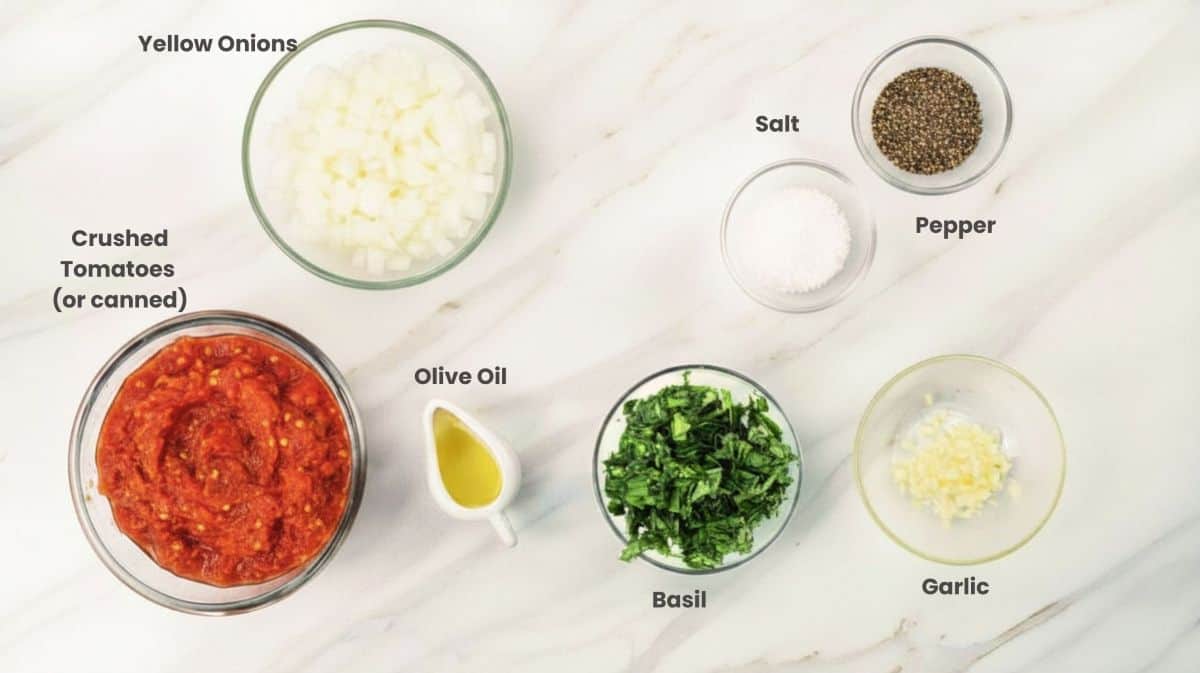
Pomodoro sauce calls for a few simple, fresh ingredients:
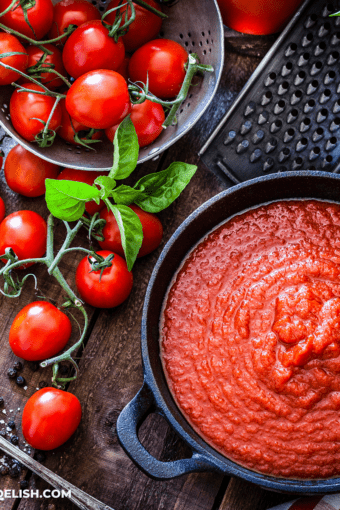
- Tomatoes: For the classic Pomodoro sauce, you can use either fresh, peeled tomatoes or canned San Marzano crushed tomatoes (passata). If you use fresh tomatoes, you may have to blend them first in order to incorporate them into the sauce or blend the sauce at the end so it will be smooth. But if you decide to use canned crushed tomatoes, they will dissolve while cooking and the sauce will wind up smooth. For the quick version, you may use a jarred tomato sauce combined with tomato paste. You want a quality ingredient because tomato is the base of this homemade sauce.
- Olive oil: You may replace it with extra-virgin olive oil that has a fresh, fruity flavor.
- Garlic: Use fresh garlic cloves You can use halved garlic that you can remove at the end of the cooking time or minced garlic that will flavor the sauce even more.
- Onions (optional): Although optional, yellow onions add more flavor to the sauce. For a quick Pomodoro sauce, use onion powder!
- Fresh basil leaves: Italians usually use the leaves whole or torn in half to hold on to their natural oils. But for a quick version, you may thinly slice the leaves and incorporate them into the sauce right away before stewing.
- Salt and black pepper: Besides these 2 basic seasonings, some add a pinch of sugar to balance the acidity of the tomatoes. If you are on a low-carb diet, do not add sugar to yours.
Variations
Pomodoro sauce calls for a few simple, fresh ingredients:
- Add chili flakes for heat. A small amount of red pepper flakes adds gentle heat that enhances the natural sweetness of the tomatoes without overpowering the sauce.
- Add butter for richness. A small amount of butter softens acidity and gives the sauce a smoother, more rounded finish. This is a classic technique in Italian cooking for balancing tomato sauces.
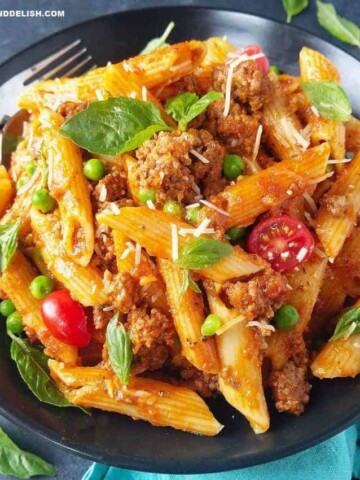
- Add meat for a heartier version. Turning pomodoro into a meat-based sauce adds depth and makes it more filling. The meat brings savory notes that complement the brightness of the tomatoes. Brown ground beef, sausage, or a mix first, then build the sauce on top of it. This method creates a richer base and works well for dishes like easy pasta bolognese.
How to Make Easy Pomodoro Sauce 30 Minute Recipe
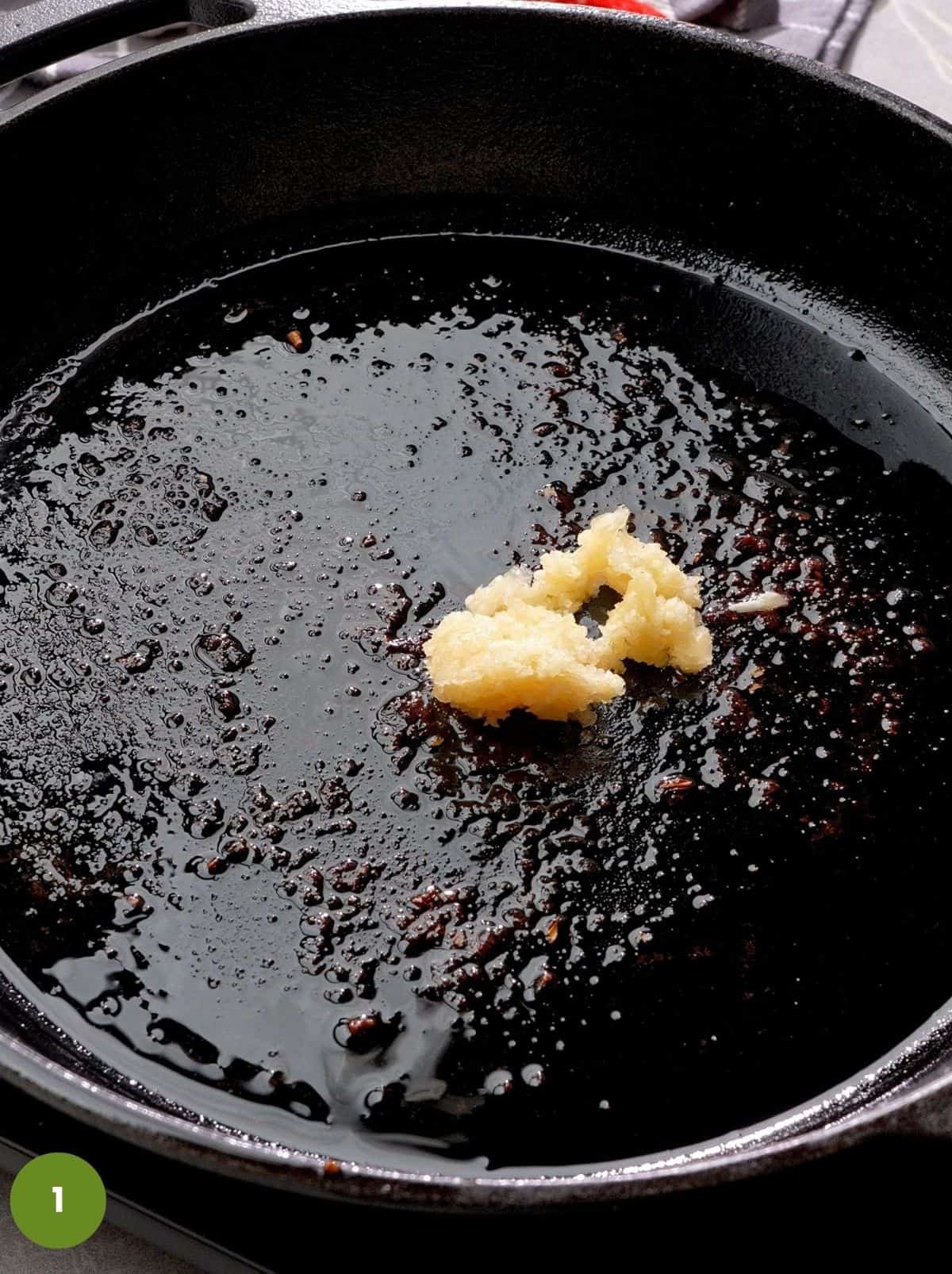
Step 1: Heat a saucepan over low to medium heat, add the olive oil and cook the garlic for about 20-30 seconds.
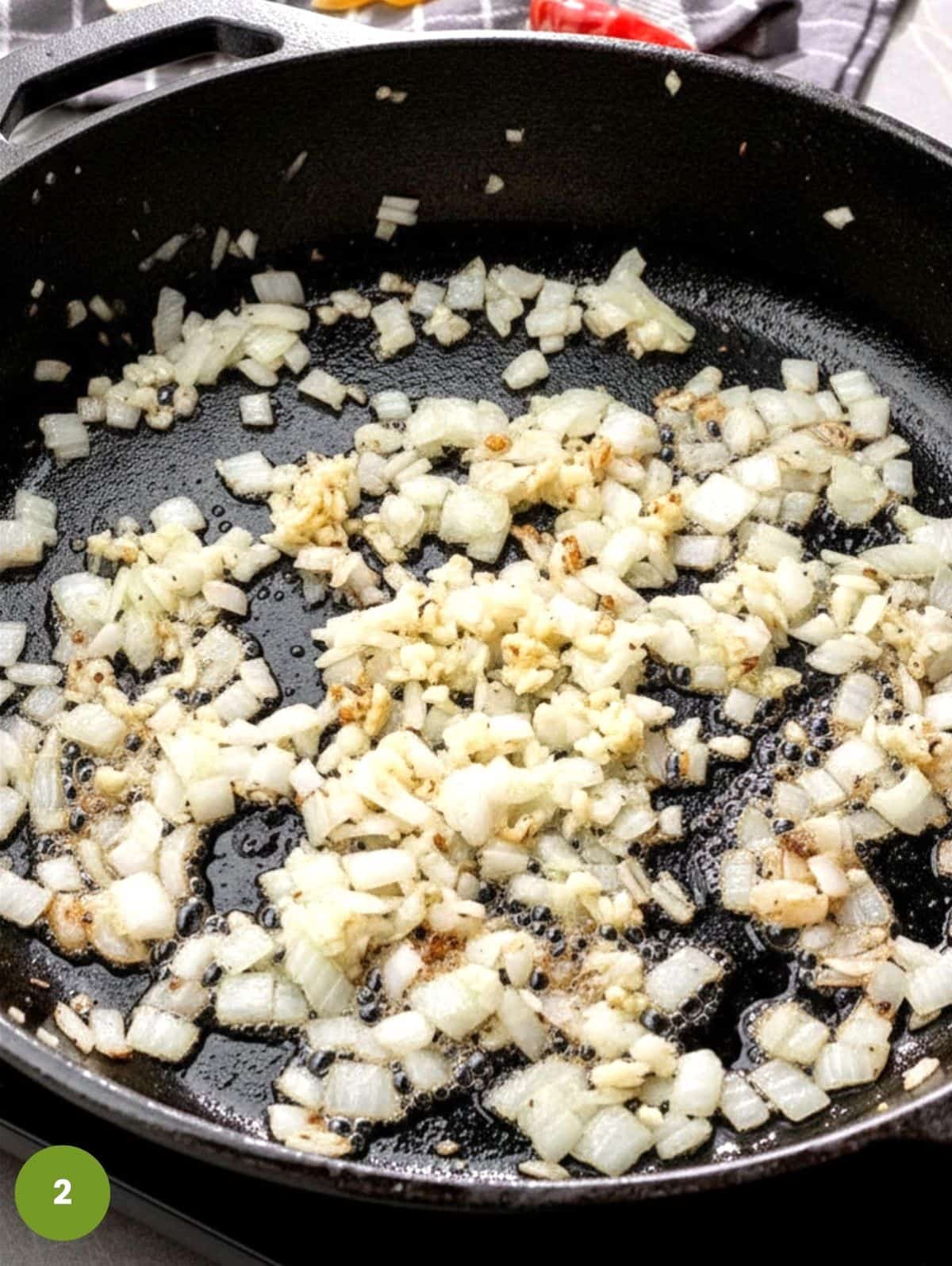
Step 2: Add the onions and cook for 1-2 minutes.
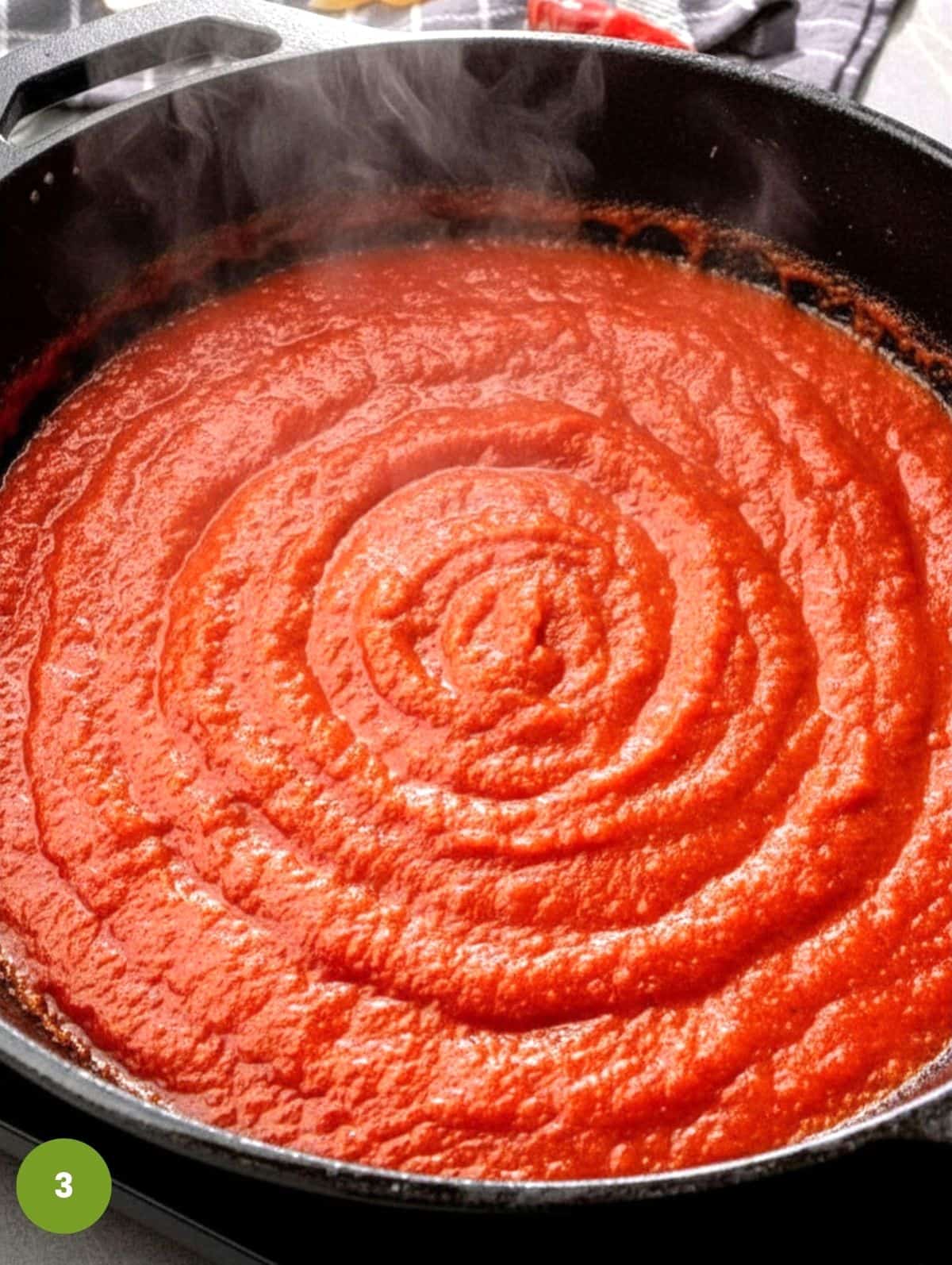
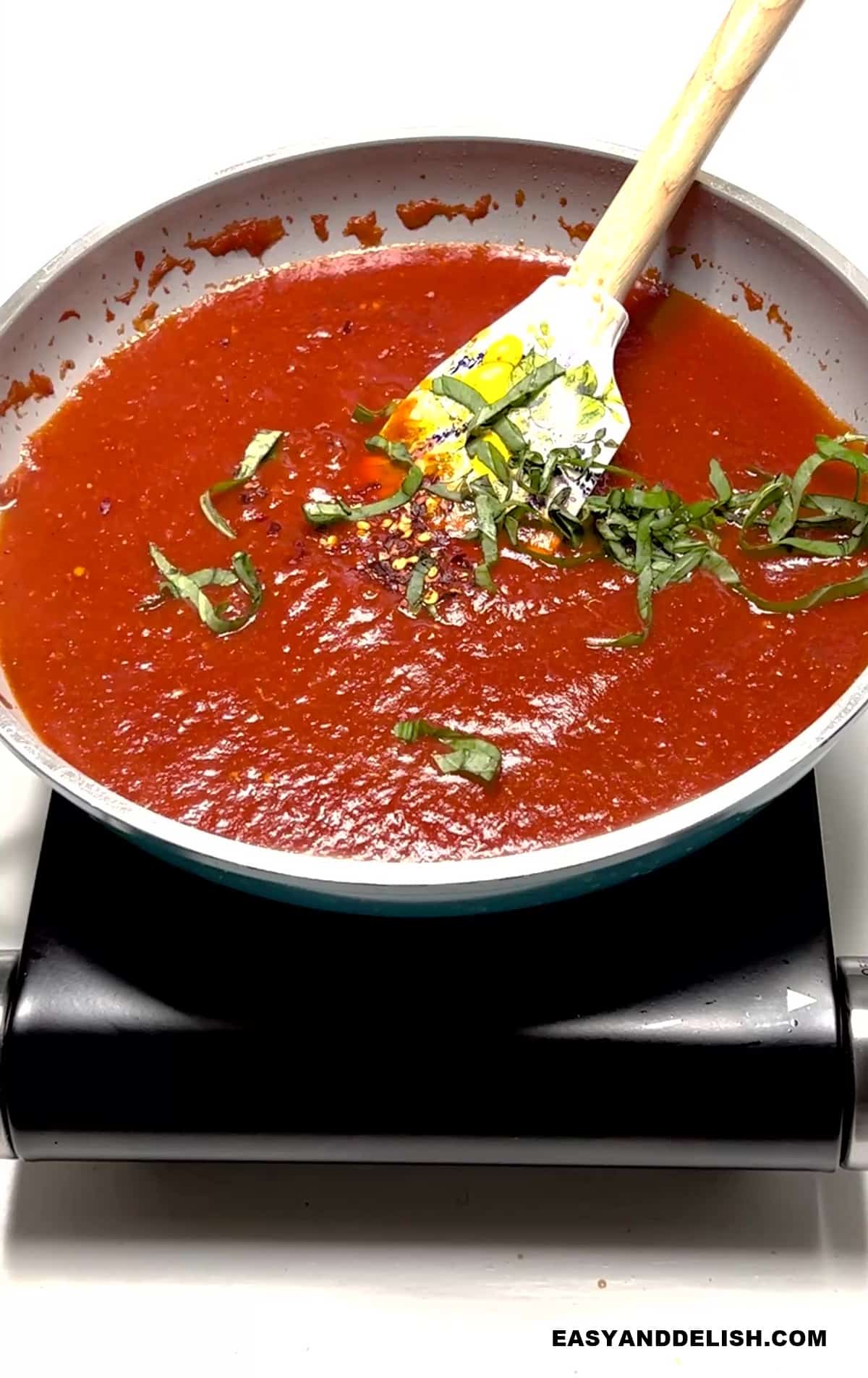
Step 3: Stir in the tomatoes, salt, and pepper. Cover the pan and let the mixture simmer over medium heat for 20 minutes, stirring now and then, or until the Pomodoro sauce has thickened.
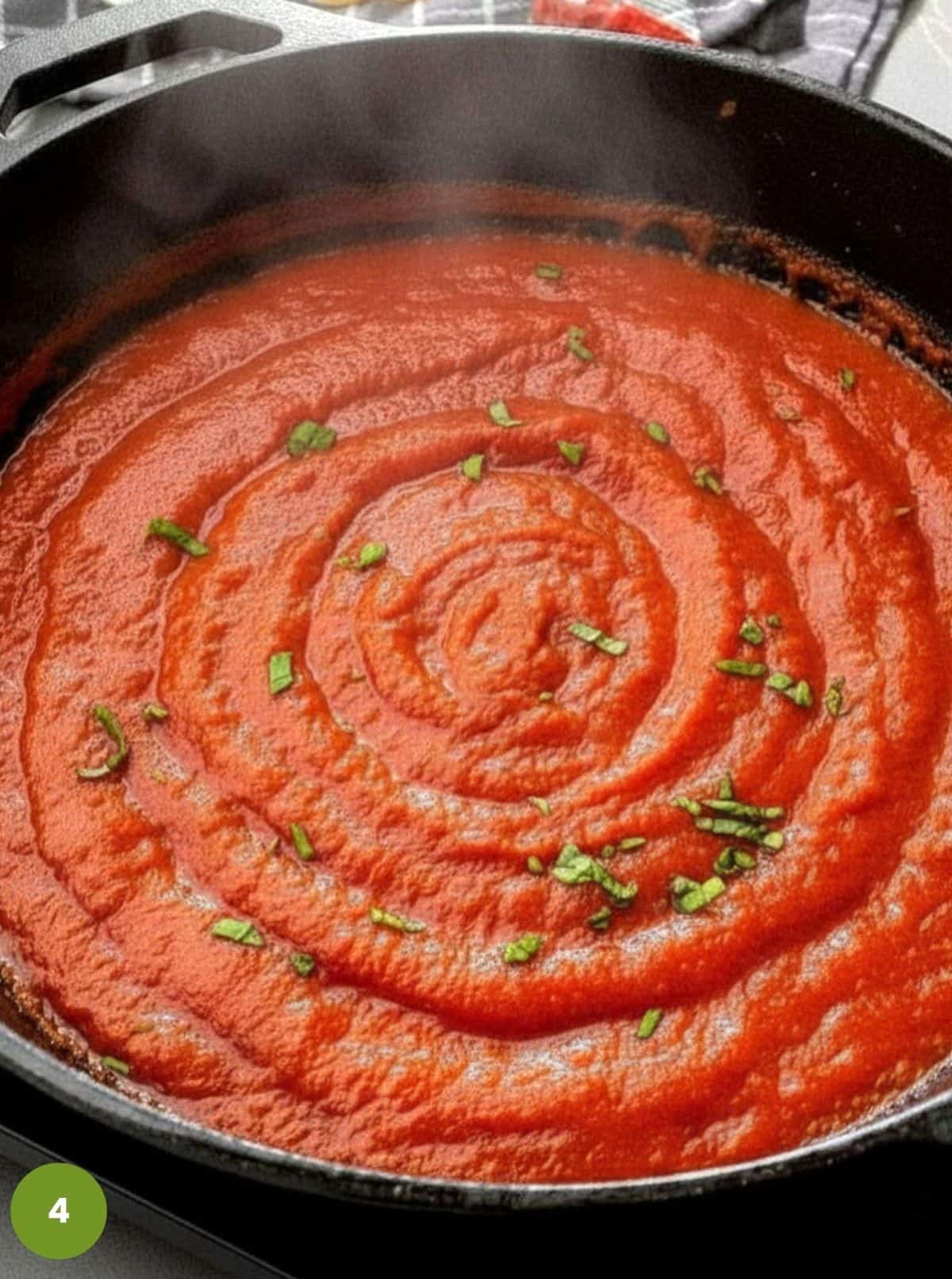
Step 4: Add the basil leaves and mix. You can use the sauce immediately or store it for later use in recipes like easy no yeast pizza dough, where a smooth tomato base works best.
Two Ways to Make It
You can prepare this sauce in two ways depending on your preferred texture and how you plan to use it.
🟡 Quick & Chunky Version
This method keeps the sauce slightly textured and works well when you want a rustic feel.
- Break tomatoes with a spoon
- Simmer briefly
- Leave slightly chunky
👉 Best for pasta dishes and casual meals.
🟡 Smooth & Classic Version
This version creates a more refined, traditional pomodoro sauce.
- Simmer slightly longer
- Blend until smooth
👉 Best for pizza, dipping sauces, or plated dishes.
Expert Tips
- Don’t burn garlic - Garlic contains natural sugars and sulfur compounds that develop flavor quickly in hot oil. When it browns too much, those compounds break down and turn bitter, which can dominate the entire sauce. Professional approach: cook garlic gently just until fragrant—usually 20–30 seconds—so it perfumes the oil without adding harshness.
- Use high-quality tomatoes - In a sauce as simple as pomodoro, tomatoes are not just one ingredient—they are the foundation of the entire flavor. Lower-quality tomatoes tend to be overly acidic, watery, or lacking depth. Use good canned tomatoes, because they are harvested at peak ripeness and give you consistent sweetness and body.
- Simmer uncovered - Leaving the sauce uncovered allows excess moisture to evaporate, which naturally thickens the sauce and concentrates the tomato flavor. If you cover it, the steam gets trapped and the sauce stays thin and diluted.
Maintain a gentle simmer uncovered so the sauce reduces slowly and develops a richer, more balanced consistency. - Adjust seasoning last - As the sauce cooks and reduces, the flavors become more concentrated. If you add too much salt early on, it can become overly salty by the end. Season lightly at the beginning, then taste and adjust salt after simmering to get a balanced final flavor.
This sauce works especially well in dishes like easy pasta bolognese, where it adds depth of flavor.
What to Serve With Pomodoro Sauce
This sauce is very versatile and can be used in many meals.
Serve it over pasta, alongside air fryer garlic bread, or use it as a base for pizza with
easy no yeast pizza dough.
Easy Pomodoro Sauce 30 Minute Recipe FAQs
Yes, pomodoro sauce freezes very well because it doesn’t contain dairy or delicate ingredients. Let the sauce cool completely, then transfer it to airtight containers or freezer-safe bags. For convenience, freeze it in smaller portions so you can thaw only what you need.
When ready to use, thaw overnight in the refrigerator or reheat directly from frozen on low heat. You may need to stir it occasionally and add a small splash of water if it has thickened too much during freezing.
Pomodoro is smoother and thicker with a clean tomato flavor, while marinara is chunkier, lighter, and more herb-forward.
Yes, fresh tomatoes can be used, especially when they are in season and very ripe. However, they contain more water, so the sauce may need a longer simmering time to reach the same thickness and depth of flavor.
For best results, peel and seed the tomatoes before cooking, and expect to cook the sauce longer to concentrate the flavor. Out of season, high-quality canned tomatoes are usually more reliable.
Yes, you can! Allow the sauce to cool and store it in an airtight container in the fridge for up to a week. Just reheat it when you are ready to serve it. Season with salt again if needed!
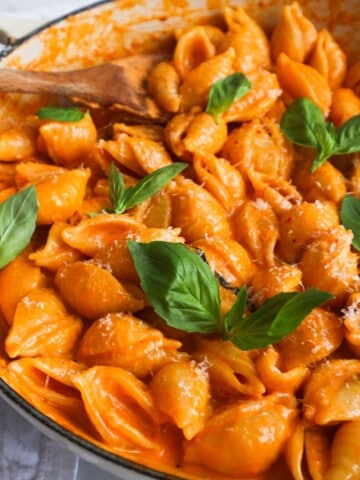
Other Recipes that use Pomodoro Sauce


Did you love this pomodoro sauce recipe?
If you tried it and enjoyed it, come back to leave a
5-star rating ⭐⭐⭐⭐⭐ and share your feedback in the comments.
PIN & ENJOY!
Pomodoro Sauce
Equipment
- 1 cutting board
- 1 Chef's knife
- 1 saucepan
- 1 wooden spoon
- blender optional
Ingredients
- 2 tablespoons extra-virgin olive oil or olive oil
- 1 yellow onion finely minced
- 4 cloves garlic finely minced or grated
- 28 oz can San Marzano crushed tomatoes (or canned whole peeled tomatoes that you can blend in the blender before cooking)
- ¼ cup fresh basil torn in half
- Salt and pepper to taste (if you are NOT on a low-carb diet, you may add a pinch of sugar to balance the acidity of the tomatoes)
Instructions
Classic Pomodoro Sauce:
- Heat a saucepan over low to medium heat, add the olive oil and cook the onion for about 3-4 minutes or until translucent. Add the garlic and cook for 1 minute.
- Stir in the tomatoes, basil, salt, and pepper. Cover the pan and let the mixture simmer over medium heat for 20 minutes, stirring now and then, or until the Pomodoro sauce has thickened.
- Toss with cooked pasta or gnocchi and parmesan cheese, or use as a topping for pizzas.
Quick Pomodoro Sauce:
- Heat a no-stick saucepan pan over medium heat. Then add olive oil and sauté the garlic for about 1 minute, stirring now and then, or until fragrant.
- Stir in tomatoes, 2 tablespoon tomato paste, 2 teaspoon onion powder, salt, pepper, 1 teaspoon red pepper flakes (optional), and basil.
- Simmer on medium-low heat for 8-10 minutes. Use an immersion blender, food processor, or blender to smooth the sauce if needed.
Recipe Notes
- Start cold for better infusion: Add garlic to cold olive oil, then bring it up to heat slowly. This extracts flavor more evenly and reduces the risk of burning.
- Control acidity without sugar first: If the sauce tastes sharp, try a small pinch of salt or a drizzle of olive oil before adding sugar—both help round acidity more naturally.
- Simmer uncovered, but watch viscosity: Keep it uncovered to reduce properly, but stir occasionally to prevent sticking and ensure even concentration.
- Finish with fat, not just salt: A final drizzle of high-quality olive oil off heat enhances mouthfeel and carries the tomato flavor more effectively.
- Blend strategically: If blending for a smooth finish, do it briefly—over-blending can introduce air and dull the color and flavor.
- Use pasta water intentionally: When tossing with pasta, add a splash of starchy water to emulsify the sauce so it clings instead of sitting on top.
- Rest before serving: Let the sauce sit off heat for 5–10 minutes. This allows flavors to settle and integrate more fully.
Nutrition
** Nutrition labels on easyanddelish.com are for educational purposes only. This info is provided as a courtesy and is only an estimate, since the nutrition content of recipes can vary based on ingredient brand or source, portion sizes, recipe changes/variations, and other factors. We suggest making your own calculations using your preferred calculator, based on which ingredients you use, or consulting with a registered dietitian to determine nutritional values more precisely.
Please note that health-focused and diet information provided on easyanddelish.com is for educational purposes and does not constitute medical advice, nor is it intended to diagnose, treat, cure, or prevent disease. Consult with your doctor or other qualified health professional prior to initiating any significant change in your diet or exercise regimen, or for any other issue necessitating medical advice.

Valentina Dimitrova says
I’ve made this both ways and love how versatile it is. The sauce turns out rich and balanced, and it’s a great base for so many dishes. It’s simple but tastes like something that took much longer to prepare.