
Farofa Recipe (Toasty Gluten-Free Cassava Flour)

A classic Brazilian side, Farofa combines toasted cassava flour, smoky bacon, vegetables, and eggs into a buttery, savory dish with a crunchy texture, served with feijoada.
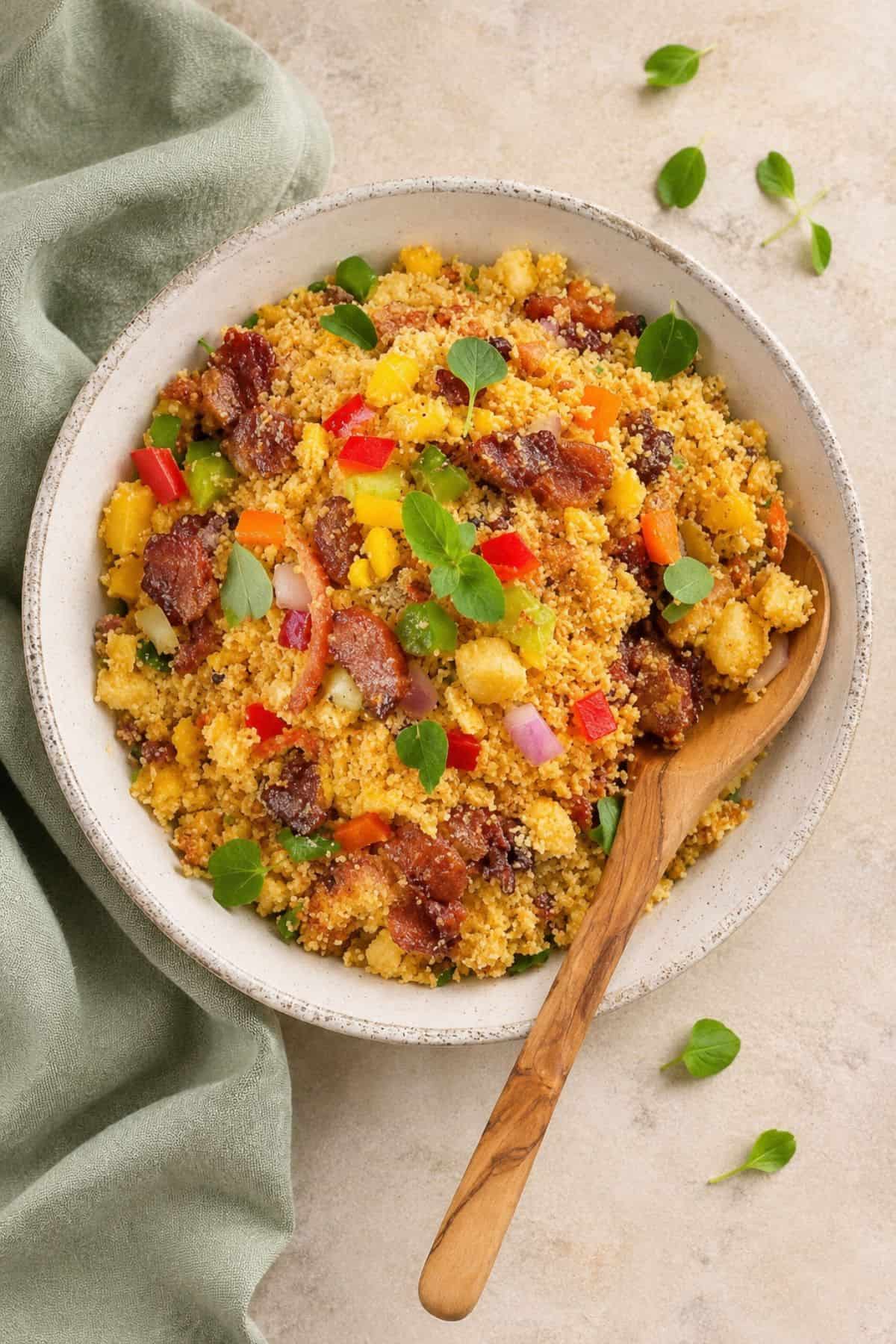
Brazilian farofa recipe is a traditional toasted cassava flour dish known for its loose, crumbly consistency. My version is more substantial than classic farofa made with butter and flour alone because it includes smoked bacon, vegetables, and chopped hard-boiled eggs. The combination gives it a rich, savory flavor with mild sweetness from the vegetables. Serve it alongside feijoada, black beans, or picadinho.
Quick Look: Farofa
- ⏱️ Prep Time: 10 minutes
- 🔥 Cook Time: 15 minutes
- ⏲️ Total Time: 25 minutes
- 🍽️ Servings: 6
- 🥓 Flavor Profile: Buttery, smoky, savory, and mildly sweet
- 🥄 Texture: Crumbly, toasty, and lightly crunchy
- 👌 Difficulty: Easy
- 🍖 Best For: Feijoada, Brazilian barbecue, and holiday meals
- 🍳 Cooking Method: Stovetop skillet
- 🥕 Key Ingredients: Cassava flour, smoked bacon, butter, onion, bell pepper, carrot, and hard-boiled eggs
- Why This Recipe Works: Bacon fat and butter give the cassava flour a rich, savory flavor. Gentle toasting and frequent stirring help the flour cook evenly and stay crumbly. The vegetables and eggs add flavor and texture.
SUMMARIZE & SAVE THIS CONTENT ON
Jump to:
What Is Farofa?
Farofa is a traditional Brazilian side dish made with toasted cassava or manioc flour, called farinha de mandioca in Portuguese. In English, it's often described as toasted cassava flour, although farofa refers to the prepared dish.
Both cassava flour and tapioca starch come from the same root, but they aren't interchangeable:
- Cassava or manioc flour: Known as farinha de mandioca, it has a dry, granular texture and may be sold in different grinds. It's the traditional flour used for farofa.
- Tapioca flour: Also called tapioca starch or polvilho, it's a fine, powdery starch extracted from cassava. It won't produce the same crumbly texture and is used in recipes such as Brazilian cheese bread.
Farofa has a slightly crunchy texture similar to coarse breadcrumbs. Its mild, toasted flavor becomes richer with butter, bacon fat, and seasonings. My version adds smokiness from bacon and mild sweetness from vegetables.
Recipes vary across Brazil. Some include sausage, eggs, raisins, or bananas. In Bahia, dendê oil, also called red palm oil, gives farofa a golden-orange color and distinctive flavor.
Cassava flour has roots in Indigenous Brazilian food traditions and is also used to make pirão, a thick mixture of flour and broth. Farofa is commonly served with rice, beans, feijoada, stews, and churrasco, or Brazilian barbecue.
Ingredients
- Manioc or cassava flour – 1 cup. Known as farinha de mandioca, this coarse, granular flour develops a nutty, toasted flavor and a crumbly texture. Choose a medium or coarse grind for cassava farofa, not fine tapioca starch.
- Butter or vegetable oil – 4 tablespoons. Butter gives the farofa a richer flavor, while vegetable oil has a more neutral taste. Both coat the cassava flour as it toasts and keep it from tasting overly dry.
- Smoked bacon – 4 strips, diced. Gives the farofa a smoky, savory flavor, with crisp bits that contrast with the softer vegetables. The rendered bacon fat also seasons the flour.
- Hard-boiled eggs – 2, chopped. The soft yolks and firm whites make the farofa more substantial and provide a tender contrast to the toasted flour.
- Yellow onion – ½ medium, finely diced. Becomes soft and slightly sweet as it cooks, which complements the salty, smoky bacon.
- Red bell pepper – 1, finely diced. Has a mild sweetness and becomes tender when sautéed. Green bell peppers have a more grassy flavor, while yellow peppers are sweeter and milder.
- Carrot – 1 medium, grated. Adds a gentle sweetness and a little moisture, which softens the otherwise dry texture of the cassava flour.
- Parsley or cilantro – 2 tablespoons, finely chopped. Parsley has a mild, grassy taste, while cilantro brings a more pronounced, citrusy flavor.
- Salt and pepper – to taste. Black pepper gives the farofa a little heat. Taste before adding salt, since the smoked bacon already contributes saltiness.
How to Make Farofa
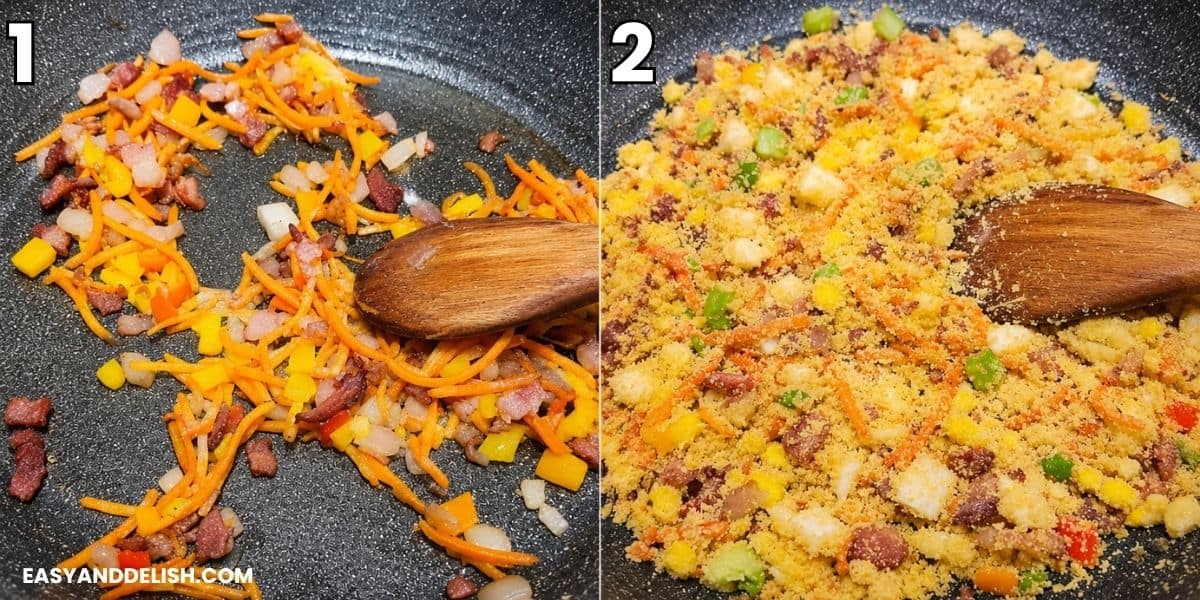
- Cook the bacon: Heat a large nonstick skillet over medium-high heat. Add the diced bacon and cook for 3–5 minutes, or until it begins to brown and release its fat.
- Sauté the vegetables: Reduce the heat to medium. Add the onion, bell pepper, and grated carrot. Cook for 3–5 minutes, stirring occasionally, until the onion softens. Add the butter or vegetable oil and stir until the butter melts and coats the vegetables. PIC. 1
- Add the cassava flour: Stir in the cassava flour until well combined with the bacon, vegetables, and butter or oil. Season with salt and pepper to taste. Add a pinch of cumin if desired. PIC. 2
- Toast the flour: Reduce the heat to medium-low and toast for another 1–2 minutes, stirring frequently for even cooking.
- Finish and serve: Stir in the chopped hard-boiled eggs and parsley or cilantro. Serve warm.
FAQ About Farofa
Yes, cassava flour is naturally gluten-free, and homemade gluten-free farofa can be prepared without wheat flour. Check packaged bacon, seasonings, and other ingredients for gluten-containing additives or cross-contact warnings.
Yes, Yoki Farofa Tradicional, Amafil Farofa Pronta, and other brands of seasoned, ready-to-eat farofa are convenient alternatives to homemade farofa. You can serve them straight from the package or mix them with cooked bacon, vegetables, and eggs. Since they're already toasted and seasoned, skip the flour-toasting step and adjust the added fat and salt.
Use a little more butter or vegetable oil if the toasted cassava flour seems too dry. Grated carrots also contribute moisture, and sautéed bananas can make a sweeter variation softer. The farofa should remain loose and crumbly rather than wet or sticky.
What to Serve With Farofa
- Brazilian Barbecue: Serve farofa with picanha roast or grilled beef. The buttery cassava flour complements the juicy meat and absorbs some of its flavorful juices.
- Rice Dishes: Pair it with Brazilian Greek rice, or arroz à grega. The tender rice, vegetables, and raisins provide a pleasant contrast to the toasted farofa.
- Vegetable Sides: Try pan-fried collard greens, known as couve à mineira. Their garlicky flavor and tender leaves pair well with the savory, crumbly flour.




Did You Love This Recipe? If you make this recipe and love it, stop back, give it a 5-star rating ★★★★★ and leave a comment.
Farofa Recipe (Toasty Gluten-Free Cassava Flour)
Equipment
- skillet
Ingredients
- 4 strips smoked bacon – diced
- ½ medium yellow onion – finely diced
- 1 red bell pepper, green bell pepper, or yellow bell pepper – finely diced
- 1 medium carrot – grated
- 4 tablespoons butter or vegetable oil – add more as needed for a richer, moister farofa
- 1 cup manioc or cassava flour
- salt and pepper – to taste
- 2 hard-boiled eggs – chopped
- 2 tablespoons parsley or cilantro – finely chopped
Instructions
- Cook the bacon: Heat a large nonstick skillet over medium-high heat. Add the diced bacon and cook for 3–5 minutes, or until it begins to brown and release its fat.
- Sauté the vegetables: Reduce the heat to medium. Add the onion, bell pepper, and grated carrot. Cook for 3–5 minutes, stirring occasionally, until the onion softens. Add the butter or vegetable oil and stir until the butter melts and coats the vegetables.
- Add the cassava flour: Stir in the cassava flour until well combined with the bacon, vegetables, and butter or oil. Season with salt and pepper to taste. Add a pinch of cumin if desired.
- Toast the flour: Reduce the heat to medium-low and toast for another 1–2 minutes, stirring frequently for even cooking.
- Finish and serve: Stir in the chopped hard-boiled eggs and parsley or cilantro. Serve warm.
Recipe Notes
Storage and Reheating
Refrigerate: Store leftover farofa in an airtight container in the refrigerator for 3–4 days. Refrigerate within two hours of cooking. Freeze: Freeze farofa without the eggs and fresh herbs in airtight freezer bags for up to 2 months. Press out excess air before sealing to preserve its texture. Reheat: Warm farofa in a skillet over medium-low heat, stirring occasionally until it reaches 165°F internally. Add a little butter or oil if it seems dry.Nutrition
** Nutrition labels on easyanddelish.com are for educational purposes only. This info is provided as a courtesy and is only an estimate, since the nutrition content of recipes can vary based on ingredient brand or source, portion sizes, recipe changes/variations, and other factors. We suggest making your own calculations using your preferred calculator, based on which ingredients you use, or consulting with a registered dietitian to determine nutritional values more precisely.
Please note that health-focused and diet information provided on easyanddelish.com is for educational purposes and does not constitute medical advice, nor is it intended to diagnose, treat, cure, or prevent disease. Consult with your doctor or other qualified health professional prior to initiating any significant change in your diet or exercise regimen, or for any other issue necessitating medical advice.

Eggs?
Yes! In Brazil, some farofa recipes like ours call for eggs... just like fried rice calls for eggs. 🙂
This is the best thing to go along with feijoada. The savory broth mixed with the toasty flavor of the farofa.... mmmm, so good!
I am so glad you have already tried this farofa recipe. It is unique and oh so delicious.
Yes, i really need this in my life. I am sure I saw cassava flour in the store and I am going to get it to try.
Hi Denise - thank you for the insightful Farofa recipe! I'll be sure to make this soon 🙂
Hi Madison! I hope you try our farofa and enjoy. It is great with grilled meats and feijoada.
where can I buy farofa flour in England
Hi, Ward! You can buy manioc flour to make farofa (the dish) in England online at https://www.amazon.co.uk/Yoki-Manioc-Flour-Farinha-Mandioca/dp/B006ISWH18 or Googling Brazilian markets in your area.
Thanks a lot for stopping by! I hope can buy the manioc flour and enjoy this farofa dish...